
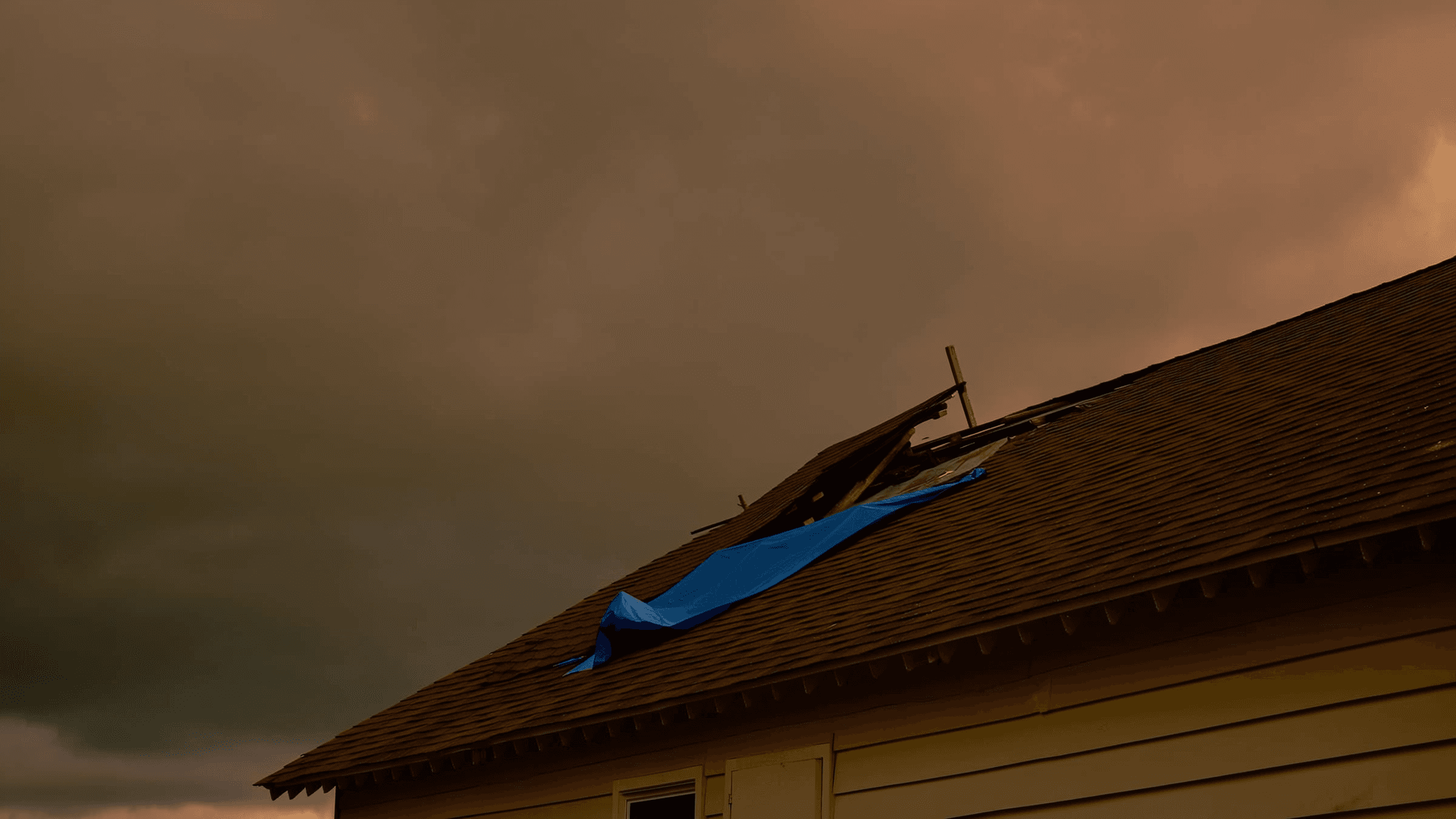
What Happened: Severe Thunderstorm Warning for St. Louis and St. Charles Counties
The National Weather Service issued a Severe Thunderstorm Warning covering St. Louis County, MO and St. Charles County, MO. The storm system produced hail up to 1.5 inches in diameter and wind gusts reaching 65 mph. Both measurements cross the threshold that roofing professionals and insurance carriers use to classify a storm as capable of causing direct structural damage to residential and commercial roofing systems.
At 1.5 inches, hail is roughly the size of a ping-pong ball. That is large enough to fracture asphalt shingle granules, dent metal flashing, crack tile, and compromise the waterproofing integrity of a roof in a single pass. At 65 mph, wind is strong enough to lift shingle tabs, tear soffit and fascia panels, and drive rain horizontally under roofing materials. Together, these two forces create conditions that frequently result in insurance-eligible roof damage.
If your property is located in St. Louis County or St. Charles County, you should treat your roof as potentially damaged until a qualified inspector confirms otherwise.
Immediate Safety Steps for Homeowners
Before you focus on damage assessment or insurance paperwork, make sure your household is safe and your property is protected from further loss. Follow these steps in order.
- Stay indoors until the storm has fully passed. Do not go onto your roof or walk your property while lightning remains in the area or wind gusts are still present.
- Check for interior water intrusion. Walk through your attic and upper floors looking for active leaks, wet insulation, or water stains on ceilings. If you find active leaking, place buckets and move valuables away from the affected area.
- Apply temporary protection if safe to do so. If you have a visible breach in your roof and conditions allow, covering the area with a heavy-duty tarp can prevent additional water damage while you wait for a professional inspection. Do not climb onto a wet or wind-damaged roof without proper equipment and experience.
- Document everything before touching it. Take photographs and video of all visible exterior and interior damage from ground level. Include wide shots showing context and close-ups showing specific impact points. Timestamp your documentation.
- Do not authorize permanent repairs before your insurance adjuster inspects the property. Permanent repairs made before an adjuster visit can complicate your claim. Temporary protective measures are generally acceptable and encouraged.
- Contact your insurance carrier to report the event. Most carriers require prompt notification after a storm. Delaying that call can give them grounds to reduce or deny a claim.
What Roof Damage to Look For After This Storm
Hail and wind damage are not always obvious from the ground, and some of the most significant damage is invisible unless you know exactly where to look. The following breakdown covers what this specific storm — 1.5-inch hail and 65 mph wind — is most likely to have caused.
Hail Damage Indicators
- Granule loss on asphalt shingles. Hail impact knocks the protective granule coating off shingles, leaving dark, exposed asphalt spots. You may also notice granule accumulation in your gutters and downspout splash blocks.
- Bruising or soft spots. When you press on a hail-impacted shingle, the underlying mat may feel soft or spongy. This is a sign the structural integrity of the shingle has been compromised even if the surface looks intact.
- Cracked or split shingles. Larger hailstones can crack shingles outright, creating direct pathways for water infiltration.
- Dented metal components. Gutters, downspouts, flashing, ridge caps, and any metal vents or skylights will show visible denting from 1.5-inch hail. These dents are some of the most reliable evidence for insurance adjusters.
- Damaged roof vents and pipe boots. Rubber pipe boot seals are frequently cracked by hail impact, which creates slow leaks around plumbing penetrations.
Wind Damage Indicators
- Lifted, curled, or missing shingles. Wind at 65 mph can exceed the design load of standard three-tab shingles and compromise even architectural shingles, especially on older roofs where the sealant strip has degraded.
- Damaged or detached soffit and fascia. These components along your roof's edge are particularly vulnerable to wind uplift.
- Debris impact damage. Branches, tree limbs, and airborne materials carried by 65 mph wind can puncture or abrade roofing surfaces.
- Gutter damage and separation. High wind can pull gutters away from fascia boards, break hangers, and bend gutter sections.
If you are unsure what you are looking at, do not guess. A professional roof inspection is the most reliable way to identify the full scope of storm damage. Request a free storm damage estimate from Vulcan Construction and one of our inspectors will assess your roof at no charge.
How to Navigate Your Insurance Claim
Filing a roof insurance claim after a severe thunderstorm is a process that rewards preparation and documentation. Carriers in Missouri have specific requirements, and the steps you take in the first 48 to 72 hours following a storm can meaningfully affect the outcome of your claim.
Before You File
Gather your homeowner's insurance policy documents and review your coverage for wind and hail damage. Note your deductible amount, any exclusions, and whether your policy covers actual cash value or replacement cost value. Replacement cost value policies will pay to replace your roof at current material and labor costs, while actual cash value policies depreciate the payout based on your roof's age.
The Filing Process
- Call your insurance carrier and report the storm. Provide the date of the event, the type of storm, and a general description of visible damage. Get a claim number.
- Schedule an adjuster visit. Your carrier will assign an adjuster to inspect your property. You have the right to have a roofing contractor present during that inspection, which we strongly recommend.
- Have an independent roofing contractor inspect your roof before or alongside the adjuster. Insurance adjusters work for the carrier. An experienced roofing contractor works for you and can identify damage that adjusters sometimes overlook or undervalue.
- Review the adjuster's scope of loss carefully. If you believe the adjuster missed damage or underestimated repair costs, you can dispute the estimate through a formal supplement or invoke your policy's appraisal clause.
- Select a licensed, insured contractor to complete the work. In Missouri, contractors performing roofing work must be properly licensed and insured. Always verify credentials before signing a contract.
Vulcan Construction has helped hundreds of St. Louis area homeowners navigate the insurance claim process. We know how adjusters document storm damage, what carriers look for, and how to ensure you receive the full benefit your policy provides. Download our free Insurance Claim Packet for a step-by-step guide, documentation checklists, and tips for working with your adjuster.
Understanding the Cost of Storm Repairs in St. Louis
One of the most common questions homeowners ask after a storm is what repairs will cost if insurance does not cover everything, or if they choose not to file a claim. Repair and replacement costs in the St. Louis market vary based on roof size, pitch, material type, and the extent of damage. See current roofing costs for the St. Louis, MO area for a detailed breakdown of what homeowners in this market typically pay for storm-related repairs and full roof replacements.
Why Acting Quickly Matters After a Storm
Missouri does not have unlimited time for insurance claims. Most policies require damage to be reported within a reasonable time period, and some have explicit deadlines. More practically, storm damage that goes unaddressed allows water to infiltrate your roof deck, insulation, and interior framing, turning a covered roofing claim into a much more expensive and complex repair involving mold remediation and structural work.
Scheduling a professional inspection now costs nothing and gives you a documented record of your roof's condition immediately following the storm. That documentation is valuable regardless of whether you file a claim.
Learn more about Vulcan Construction's storm damage roofing services, or schedule your free inspection online. Our teams serve St. Louis County, St. Charles County, and surrounding communities throughout the greater St. Louis metro area.